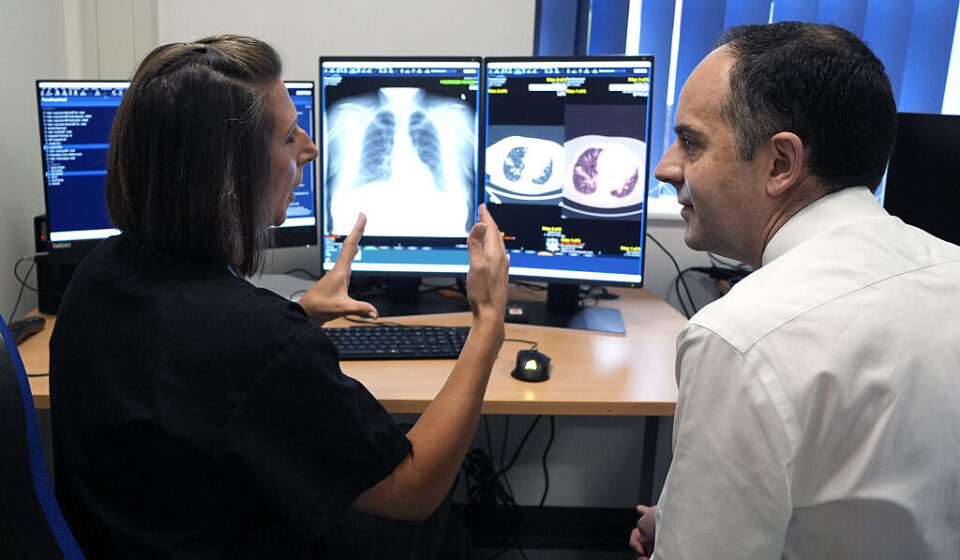

In 2016, Geoffrey Hinton, the Nobel-winning “godfather of AI,” made a bold prediction: radiologists—the physicians who interpret X-rays, ultrasounds, and other medical images—would be replaced by computers within five years. Today, the field might respond with Mark Twain’s famous quip: “The report of my death was an exaggeration.” Radiology’s ranks are actually growing steadily, with the number of practitioners expected to expand by 26 percent or more over the next three decades.
However, Hinton’s miss on job market dynamics shouldn’t overshadow his prescience. He was right that human physicians now have a silicon-based colleague in the room that matches or exceeds their performance. In fact, radiology is far and away medicine’s hotspot for AI, making it a bellwether for the adoption of expert decision-making systems across healthcare and potentially other fields.
The Current State of AI in Radiology
As of early 2026, about three-quarters of the 1,400 AI-enabled medical devices cleared by the U.S. Food and Drug Administration (FDA) were designed for radiology. These tools are not all created equal. Some aim to make physicians more efficient by drafting reports or flagging images that urgently need attention. Others go further, with the potential to improve on human performance by identifying abnormalities that may not be visible to the human eye, or by interpreting images as well as—and sometimes better than—trained radiologists.
Real-World Impact: AI-Assisted Colonoscopy
One concrete example comes from an analysis of 43 clinical trials, which concluded that AI-assisted colonoscopies reveal more polyps than conventional ones. This suggests that AI can enhance diagnostic accuracy in practical, measurable ways.
What This Means for Radiologists
Rather than facing replacement, radiologists are likely to see their roles evolve. AI can handle routine tasks, but human expertise remains crucial for complex cases, patient communication, and integrating imaging findings into broader clinical care. The growing number of radiologists indicates that demand for their skills persists, even as AI becomes more integrated into daily practice.
The trajectory of AI in radiology offers a glimpse into how expert decision-making systems might be adopted in other medical specialties and beyond. The key takeaway is not obsolescence, but transformation—a shift in what radiologists do, not whether they do it.