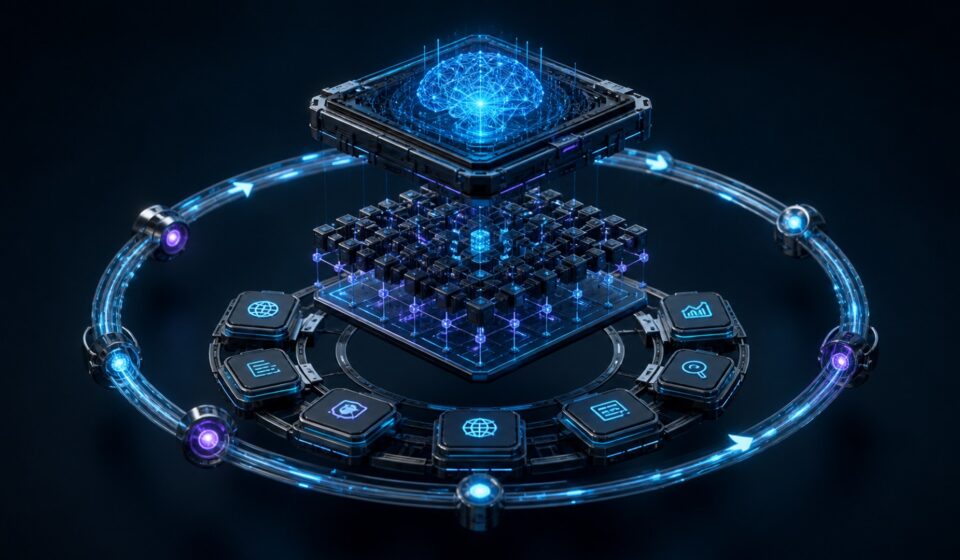

Artificial intelligence agents are systems that combine several key elements to perform tasks autonomously. At their core, they rely on a model, instructions, tools, memory, and a control loop. Understanding how these parts interact reveals both the capabilities and the limitations of AI agents.
The Core Components of an AI Agent
An AI agent is built from a few essential pieces that work together. The model serves as the decision-making engine, while instructions define the agent’s objectives. Tools allow the agent to interact with external systems, and memory stores information for future use. The control loop orchestrates the entire process, enabling the agent to act and respond dynamically.
The Model and Instructions
The model is the central component that processes input and generates output. It is guided by instructions, which specify the task or goal the agent should accomplish. These instructions can be simple or complex, shaping how the model behaves.
Tools and Memory
Tools extend the agent’s capabilities beyond text generation. They might include web search, database queries, or other APIs. Memory, on the other hand, allows the agent to retain context from previous interactions, which is crucial for tasks that require continuity.
The Control Loop: How Agents Execute Tasks
The control loop is the process that ties everything together. It repeatedly cycles through observing the current state, deciding on an action using the model, and executing that action with the help of tools. This loop continues until the task is completed or a stopping condition is met.
This architecture enables agents to handle complex, multi-step tasks that would be impossible for a single model call. However, it also introduces potential points of failure.
Why AI Agents Sometimes Fail
Despite their power, AI agents are not infallible. Failures can occur at any stage of the control loop. For instance, the model might misinterpret instructions, tools might return incorrect data, or memory might be overwritten or lost. The interaction between components can also lead to unexpected behavior, especially when the agent faces ambiguous situations or insufficient information.
Understanding these failure modes is essential for designing more robust agents and for setting realistic expectations about their performance.